How do I trust this case?
Surface credibility signals earlier instead of hiding them deeper in the journey.
Refining a high-attention wedding planning channel around trust, inspiration, and vendor discovery, so case browsing felt more credible and easier to act on.
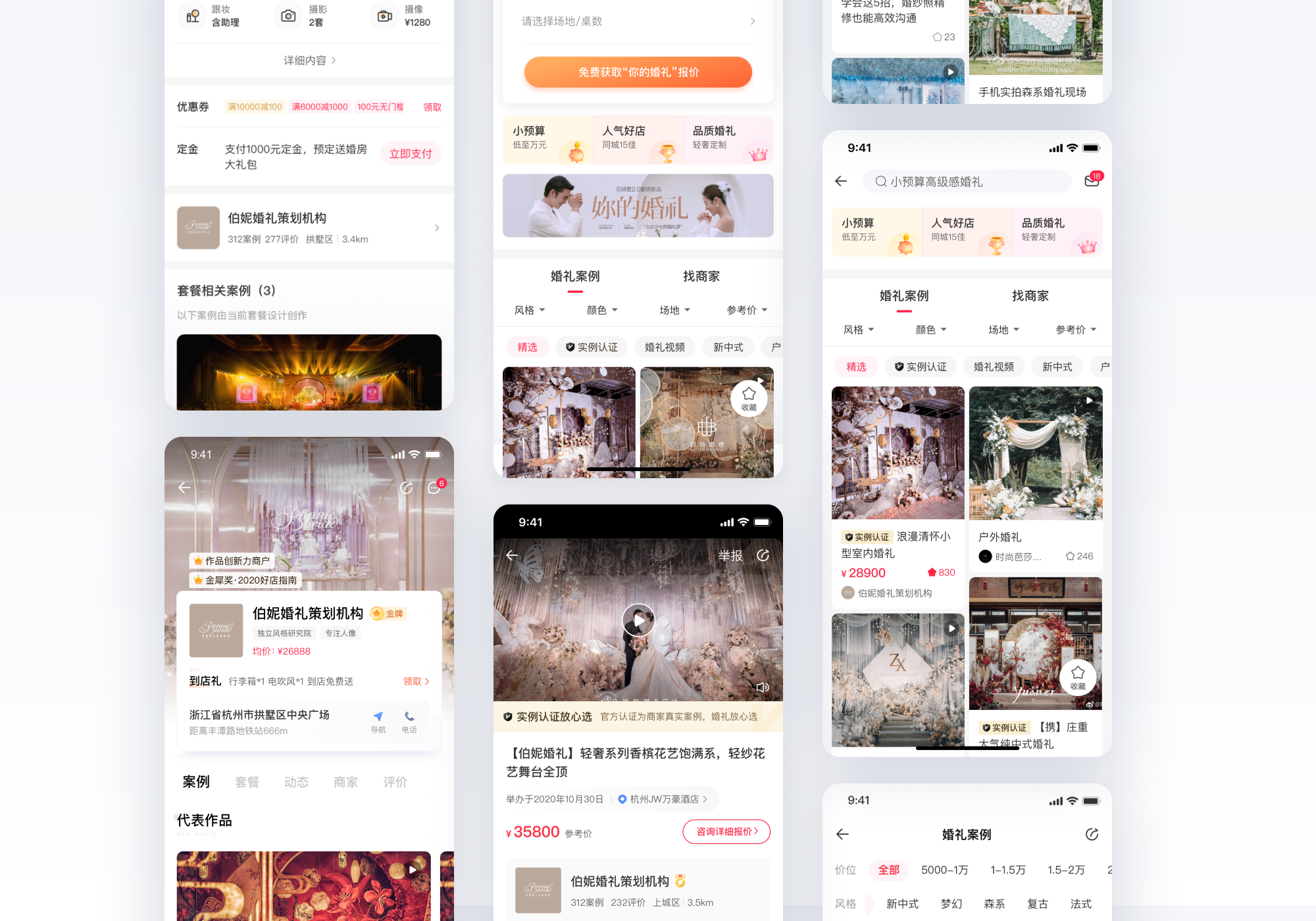
The wedding planning channel was one of the top three areas new couples cared about on the platform. Research showed a simple truth: when users looked for wedding planning services, they always looked at cases.
The problem was trust. Users relied on cases to judge quality, but many of them questioned whether those cases were real, representative, or relevant to their own expectations.
If cases were the most important decision surface, the channel could not behave like a generic content feed. It had to help users do three things well: find relevant styles, trust what they were seeing, and connect the case back to the vendor behind it.
Surface credibility signals earlier instead of hiding them deeper in the journey.
Use filters and tags that match how users compare styles, venues, colors, and budgets.
Bridge inspiration and conversion by keeping vendor context close to the case itself.
The refinement brought stronger structure to browsing. Case lists, vendor discovery, and filtering started to work together rather than feeling like separate surfaces. Style, color, venue, and reference price became useful comparison tools instead of background metadata.
I also pushed credibility signals forward, such as certified or real-scene content, so users could judge quality with less uncertainty. Vendor profile context, case detail, and inquiry entry points became more closely connected.
I independently owned requirement understanding and interaction design, and I coordinated across teams to keep the refinement aligned with the parallel vendor portfolio publishing work.
This project was smaller than the vendor portfolio publishing work, but it mattered because it translated backend content quality into a frontstage browsing experience users could actually trust.
This case sits between my earlier visual-heavy work and my later system-heavy work. The channel still required taste and presentation judgment, but the real challenge was product framing: how content trust, discovery, and conversion support one another.